Decoding Sri Lankan Rice & Curry
How a proper rice-and-curry spread works, what sambols are, how to ask for milder spice, and what to order on the coast vs in the hills.
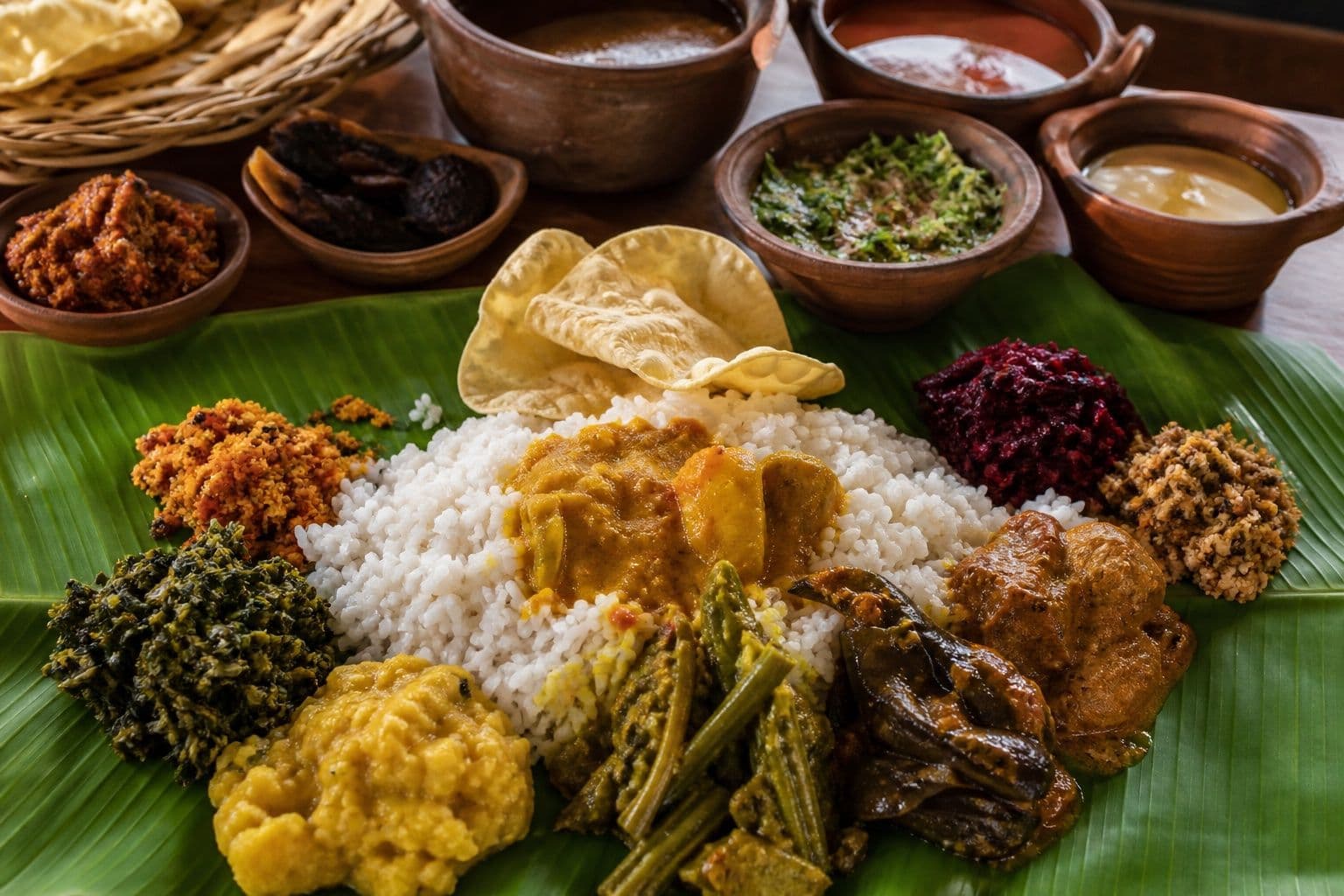
Rice and curry is not one dish — it is a table. Expect steamed rice surrounded by several vegetable curries, a dhal, a protein (fish, chicken, egg, or jackfruit), crisp papadam, and at least one sambol (often pol sambol — coconut, chilli, lime, onion). You eat with the right hand or a spoon; mix small amounts of each curry into each bite of rice rather than flooding the plate.
Flavour map
Sri Lankan heat comes from fresh chilli and roasted curry powder, balanced with coconut milk, goraka, pandan, curry leaves, and Maldive fish in many kitchens. “Devilled” dishes are wok-tossed and fiery; “white curry” is gentler and coconut-forward. If you are chilli-shy, say “less spicy” or “athini nathi” politely when ordering — home cooks and tourist restaurants usually adjust.
By region
South and west coasts shine with fish ambul thiyal, prawn curry, and crab. Hill country leans into jackfruit (polos), beans, and hearty lentil dishes. Muslim and Malay heritage kitchens add biryani and seeni sambol. Breakfast culture means hoppers (appam), string hoppers, and egg hoppers with lunu miris — try them at least once.
How to order like a guest
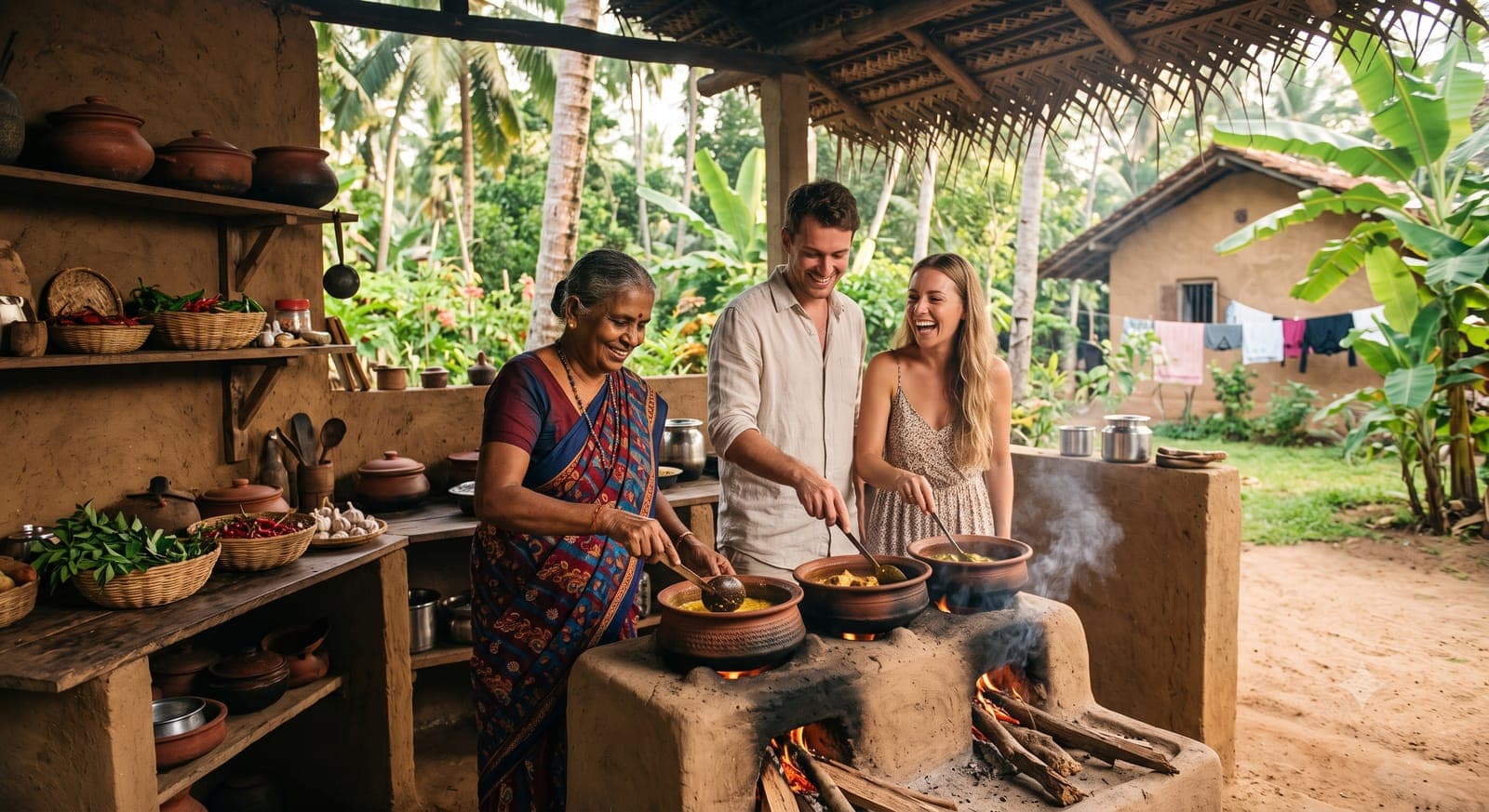
Start with a rice-and-curry set lunch in a local restaurant, then graduate to a village cooking class where you grind spices and cook over a hearth. Drink fresh king coconut (thambili) with spicy meals. Arrack (coconut toddy spirit) appears in cocktails in Galle — sip slowly.
Etiquette
Wait for elders to begin in a home setting; do not point your feet at people or shrines; finish what you take. Vegetarians eat brilliantly here — ask which curries are fish-based (anchovy stock sometimes hides in vegetable pots).