Temple Etiquette in Sri Lanka
Practical dos and don’ts at Buddhist and Hindu sites: dress, shoes, photos, offerings, and how to behave around monks and sacred images.
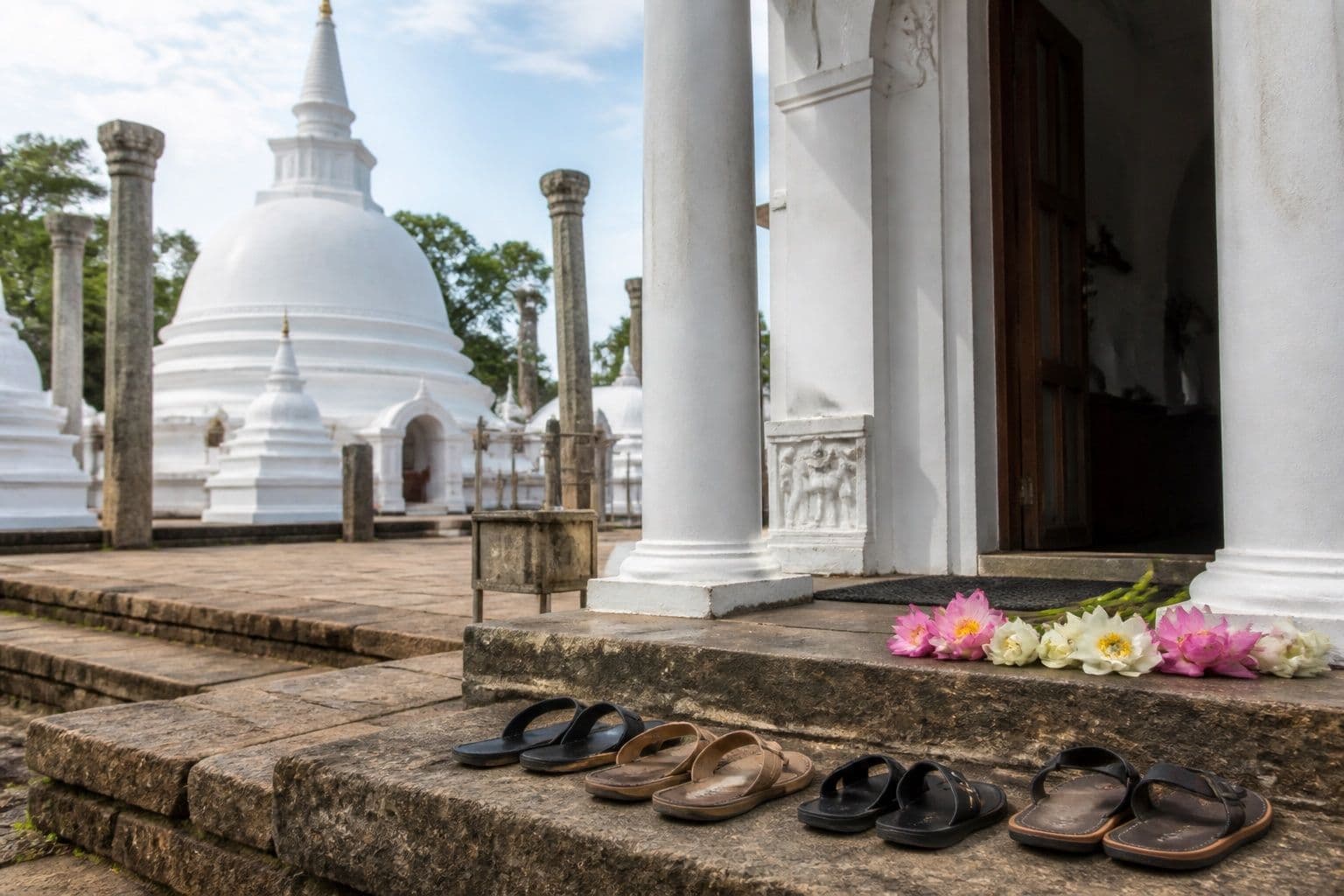
Sri Lanka’s temples and kovils are active places of worship, not only photo stops. The four rules that cover most situations: (1) cover shoulders and knees, (2) remove shoes and hats, (3) never pose with your back to a Buddha image, (4) never point the soles of your feet at sacred images or monks.
Dress walkthrough
Long trousers or a below-knee skirt plus a sleeved top works at Temple of the Tooth, Dambulla, Anuradhapura, Polonnaruwa, and most kovils. Bare shoulders cause more refusals than almost anything else. Leggings alone are often judged too revealing at strict sites. Carry a light sarong — many major temples also lend one for a small fee, but arriving covered is better than borrowing over beachwear.
Shoes & heat
Remove footwear before shrine buildings and many courtyards; use the shoe counter or a bag. Midday stone can burn bare feet — thin socks help. Silence phones; speak quietly; do not walk between a worshipper and the shrine.
Photos & monks
Ask before photographing people, especially monks and devotees. Women should avoid physical contact with monks. Do not wear clothing printed with Buddha images. Flash is often banned in cave temples such as Dambulla. Drones near sacred sites are usually prohibited.
Offerings & tickets
Flower trays and oil lamps are common; buy from official stalls and follow what locals do. Donate via labelled boxes, not random intermediaries. Foreign-visitor tickets are common — keep small LKR ready. White clothing is customary for some poya-day visits but not required for casual sightseeing.
Hindu kovils
Same modesty baseline. Men may be asked to remove shirts before an inner sanctum; some areas may restrict non-Hindus — follow signage and staff. During festivals, give processions and priests space. When unsure, watch for 30 seconds and copy respectful locals.